Posts

INPUT DEVICES

Image
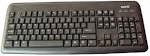
INPUT DEVICES An input device is a peripheral device through which data are entered or fed and transformed into machine – readable form. Before computer processing, data must be entered into computer by an input device so that they can be translated into a machine – readable form. EXAMPLES OF INPUT DEVICE KEYBOARD One of the most common and familiar input device is the standard keyboard. Computer keyboard are of two sizes 84 keys or 101/102 keys, but now 104 keys or 108 keys. It contains the following sections: (i)                  Numerical keypad: It is used to enter numeric data or control cursor movement.  (ii)                Function keys: These are arranged in a row along the top of the keyboard. Each of them has unique meaning and is used for some specific purpose. (iii)       ...

ALTERNATIVE LOGIC CIRCUIT

Image
These are gates that are formed from combination of two logic gates. There are two types of alternative logic gate: NAND GATE A NAND gate is the combination of an AND gate and NOT gate. It operates the same as an AND gate but the output will be opposite. Remember, the NOT gate does not always have to be the output leg; it could be used to invert an input signal also. LOGIC SYMBOL FOR THE “NAND” GATE Notice the circle on output C. TRUTH TABLE FOR THE “NAND” GATE INPUT INPUT OUTPUT A B C 0 0 1 0 1 1 1 0 1 1 1 0 NAND GATE EQUATION The NAND gate operation can also be expressed by a Boolean algebra equation. For a 2 – input NAND gate, the equation is: X = A.B This equation read X equal to A and B NOT, which simply means that the output of the gate is not a logic 1 when A and B inputs are the...

COMPUTING DEVICE (20TH CENTURY TO COMPUTER AGE)

Image
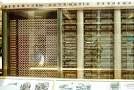
HARVARD MARK I In 1937, Howard A. Aiken of Harvard University, using the techniques already developed for punched card machinery, began work on the design of a fully automatic machine in collaboration with International Business Machines Corporation. His aim was to develop a machine that could help him in the solution of difficult differential equations, the large calculation of which would have been unreal manually. COMPONENTS The Mark I was originally controlled from pre – punched paper tape without provision for reversal, so that automatic transfer of control instructions could not be programmed. Output was by card punch and electric typewriter. USES Harvard Mark I, handled 23 – decimal – place numbers (words) and could perform all four arithmetic operations; moreover, it had special built – in programs or sub routine to handle logarithms and trigonometric functions. ENIAC ENIAC used a word of 10 decimal digits instead of binary ones like previous automated calcula...